Keeping Industrial Garage Doors Safe, Useful, and Compliant
Industrial garage doors do more than open and shut a structure. They protect devices, control access, assistance manage weather condition exposure, and keep day-to-day procedures relocating. When a door begins dragging, an electric motor waits, or a panel shows visible wear, garage door repairs gold coast prices the issue is seldom just cosmetic. On an active site, a malfunctioning door can slow deliveries, disrupt operations, and produce a safety and security problem long in the past anybody classifies it a major repair.
That is specifically true in Queensland, where weather and compliance both shape the method garage doors need to be picked, kept, and fixed. A door that functions fine in moderate conditions may be the wrong door for a cyclone-prone location. A door that has not been serviced on schedule might still open, however it might not satisfy the requirement anticipated of a commercial or industrial opening that is counted on everyday. The useful question is not just whether the door moves. It is whether it remains safe, useful, and certified under the conditions it will really face.
Why commercial garage doors should have more interest than they often get
Industrial doors often tend to be considered provided till something goes wrong. That is reasonable. They are built to be trustworthy, and in many facilities they are opened and closed lots of times every day without much idea. Yet the mix of weight, tension, relocating hardware, and automated controls means there is extremely little margin for neglect.
A door that is somewhat out of equilibrium can put added stress and anxiety on course, rollers, springs, and electric motor components. That kind of tension does not remain tiny for long. It generally appears first as slower movement, irregular travel, a louder procedure, or a door that no more seals effectively. If those indicators are neglected, the repair service can end up being extra engaged and extra costly than it required to be.
Safety is an additional factor these doors need cautious handling. Springs and cords bring major stress. Opener systems are convenient, yet they can likewise mask underlying mechanical issues. An entrepreneur might see a door that still opens up and think every little thing is fine, when actually an experienced eye would identify use that could influence performance or trigger a failing later.
On commercial websites, the risks rise further since doors are not isolated family fixtures. They become part of a bigger structure envelope and a protection system. If they stop working, the building can be exposed to weather, particles, unsanctioned entry, or inner damage to materials and devices. A weak point in a garage door can become a weak point in the whole structure.
Compliance is not an optional extra
One of one of the most misunderstood components of garage door upkeep is conformity. Individuals frequently presume a requirement is just pertinent at the time of installation, or matters if a council examiner is entailed. That is not just how it works in practice. Criteria can be voluntary in the abstract, but once they are referenced by regulation, they end up being the standard that matters.
In Queensland, the structure structure is based on the National Construction Code, the Queensland Growth Code, the Building Act 1975, and the Structure Regulation 2021. That matters because garage doors in specific areas are not just ordinary hardware options. In cyclone-prone regions, garage doors installed considering that 2012 have to meet the wind-rated requirements of AS/NZS 4505. Queensland government support has also made clear that older doors might not have enough stamina for cyclonic winds.
That is a critical point for any person in charge of a commercial website. A door may have benefited years and still disappoint current expectations in a wind area where higher resistance is called for. In those situations, industrial garage door repairs alone might not be enough if the door itself is fundamentally inappropriate. Often the right response is repair work. In some cases it is replacement with a compliant, wind-rated system.
Queensland guidance additionally notes the effects of garage door failing in serious weather condition. The door is not a minor device. If it gives way, wind can get in the building and cause major damage to walls, ceilings, roof cladding, and components. It can also create hazardous wind-borne debris. When that takes place, the cost is seldom limited to the door. The door failure can become the factor where a workable trouble develops into a much larger structure issue.
Choosing the right door kind for the site
Industrial residential or commercial properties use various door styles for various reasons, and each design comes with compromises. The best selection is not constantly the strongest on paper or the most inexpensive to buy. It is the one that fits the site, the direct exposure, and the maintenance capacity of the business.
Roller doors are frequently valued for their portable footprint. They suit websites where room around the opening is tight and where a straightforward, upright operation works. Sectional doors can use a different equilibrium, with panel building that might match insulation or constant use requirements. Turn doors have their own area also, though they need sufficient clearance and are not constantly the most effective suitable for every industrial layout.
In a cyclone-prone area, the design matters much less than whether the mounted door is rated and fit for the wind area. A door that is structurally great in one setting may not be ideal in another. That is where garage door standards require to lead the choice as opposed to behavior or familiarity.
It is garage door resource also worth considering what happens after the door is mounted. A system that is easy to service, simple to check, and suitable with normal upkeep is usually the far better lasting selection. That is specifically real for commercial websites where downtime is expensive. A a little much more taken into consideration in advance choice can lower the possibility of duplicated repair work later.
Maintenance is what keeps a compliant door behaving like one
Compliance at installation does not eliminate the demand for upkeep. A wind-rated door or a premium opener can still wear away if it is neglected. Coastal settings, particularly, punish equipment. Salt and wetness speed up deterioration, and deterioration changes the way relocating parts perform.
Gliderol's upkeep advice is a useful tip of how useful maintenance needs to be. It recommends that panel doors be fueled oil every 3 to 6 months and serviced every 2 years, with more constant attention for coastal residential or commercial properties. That does not imply every website has identical needs, yet it does show that waiting on a failure is the wrong strategy. Routine care belongs to the door's functioning life.
A service interval also has a compliance dimension. Gliderol notes that failure to adhere to authorised maintenance intervals might impact guarantee protection, specifically for motorised parts. B&D likewise mentions that some guarantee protection depends upon maintenance within the first one year and afterwards at least every 2 years when a door and opener are bought with each other. Those details matter because warranty and upkeep often relocate together. If an organization overlooks solution suggestions, it might shed more than smooth operation.
For industrial websites, the practical value of maintenance is simple. A professional can examine equilibrium, look over the problem of springtimes and wires, inspect opener performance, and identify wear prior to it comes to be failing. That sort of focus is much less disruptive than awaiting a door to jam at the wrong time.
The indication that must not be combed aside
Some door issues are evident. Others are refined sufficient that individuals obtain made use of to them. A door that has ended up being noisier, slower, or tougher to regulate might still be "functioning", yet that is not the exact same thing as functioning effectively. Those modifications usually indicate friction, imbalance, or stopping working components.
There are additionally simpler concerns that can imitate an extra severe fault. B&D notes that typical troubleshooting checks consist of reduced remote batteries or the opener being detached from the door. Those deserve ruling out, because not every mistake requires significant intervention. Once the simple checks are done, an experienced specialist needs to take care of the repair service and servicing. That is not just a traditional referral. It mirrors the truth of springs, tensioned wires, and automated systems that can be dangerous if dealt with incorrectly.
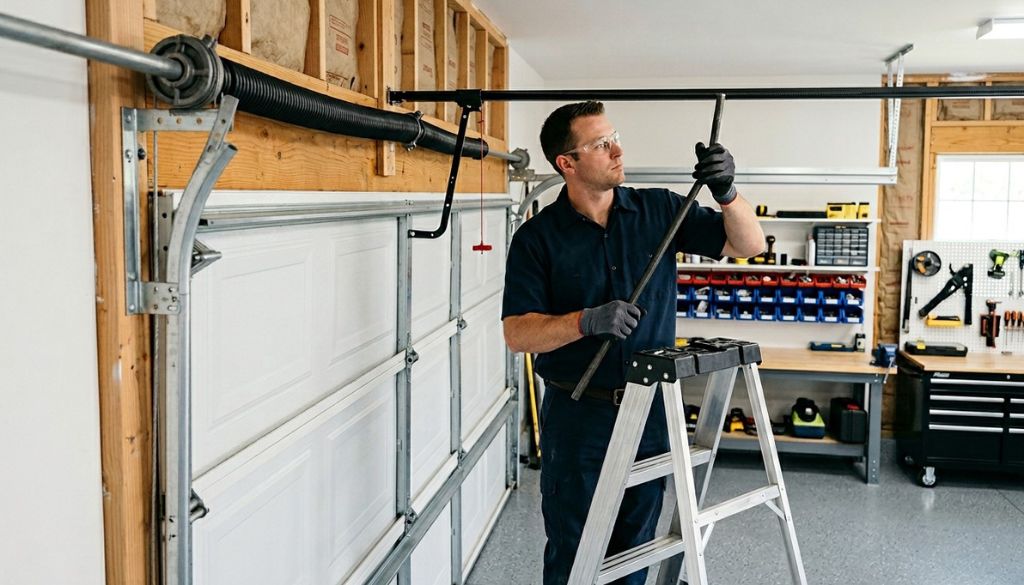
A useful website supervisor learns to take these indicators seriously:
- uneven opening or closing
- obvious scratching, grinding, or jerky movement
- visible wear in cables, springtimes, or door hardware
- an opener that thinks twice, separates, or behaves inconsistently
- damage to panels or tracks after effect or extreme weather
None of those signs must be dealt with as normal wear to be left indefinitely. The earlier a problem is checked, the more likely it is that the remedy will be straightforward.
Repairs versus replacement: where judgment matters
Not every malfunctioning door requires to be changed, and not every repair is worth doing. That decision depends on age, condition, compliance, the most likely root cause of the mistake, and the setting the door runs in. This is where experience matters greater than positive outlook. An economical repair work can be expensive if it just acquires a short respite prior to another failure.
If the door is or else structurally sound and the issue is limited to use in a part or a mistake in the opener, commercial garage door fixings might be the practical option. That could recover function without unneeded disruption. But if the door is old, deterioration is widespread, parts are repetitively failing, or the door does not meet existing wind-rating needs for the site, replacement might be the more responsible choice.
That decision comes to be a lot more pushing in Queensland's cyclone-prone locations. Queensland government guidance says doors set up in impacted locations since 2012 need to satisfy the wind-rated requirement, and older doors may not have enough stamina for whirlwind winds. If a site is operating with a door that predates that expectation, repair work alone may not solve the underlying threat. The inquiry then ends up being whether the structure is relying on a door that is merely not up to the task.
A beneficial means to think of it is this: repair work fixes what is damaged, substitute solutions what is inadequate.
Opener upgrades, controls, and daily use
Motor and opener systems are worthy of attention of their own. They are usually treated as secondary to the door, however they shape exactly how the whole system acts. A door with a healthy and balanced panel and worn opener can still be a problem. Likewise, an effective opener will not compensate for a door that is out of balance or structurally compromised.
B&& D notes that a few of its openers consist of a solution sign light, which is a sensible pointer that the tools itself can signal when it requires attention. That type of function is useful since it triggers action before a small issue becomes a closure. B&D additionally states that its doors and openers are made and evaluated in Australia, which is relevant since neighborhood conditions should shape regional tools choices.
For commercial individuals, wise controls and remote gain access to can be handy, however comfort should never outrun dependability. The more complicated the control system, the more important it is that upkeep corresponds and that operators recognize the distinction in between an individual issue and a mechanical problem. A remote that quits reacting might be a battery. It may also be a signs and symptom of a door that has been detached from the opener or a system that needs professional attention.
Corrosion, coastal exposure, and the Gold Shore reality
Coastal job sites cope with a different maintenance profile. Salt air does not require much motivation to produce problems on metal components, relocating equipment, and exposed fixings. That is why service frequency matters extra near the coast than it might inland. A door can look serviceable from a range and still be creating deterioration at the edges, in the equipment, or around the moving components where wear first appears.
This is one reason seaside operators ought to think meticulously concerning both door choice and service planning. A model that is adequate in other places may require a lot more constant focus in a coastal setting. Regular servicing is not about over-maintaining tools. It has to do with maintaining ahead of the problems that antagonize it every day.
For businesses on the Gold Coastline or in likewise revealed locations, the link between climate resistance, rust prevention, and compliance is tough to ignore. A garage door that binds, leaks, or loses toughness is doing more than creating a hassle. It is undermining the structure's resilience.
A functional maintenance rhythm that in fact works
A great upkeep timetable does not require to be complicated to be effective. It requires to be regular, reasonable, and matched to the website. For lots of operators, the trouble is not an absence of details. It is that maintenance obtains brushed aside up until the door becomes obviously troublesome.
A workable rhythm normally looks something like this:
- keep an eye on adjustments in noise, equilibrium, and speed
- arrange set up expert maintenance instead of waiting on failure
- treat seaside direct exposure and hefty usage as reasons for more frequent checks
- make certain opener problems are analyzed alongside the door itself
- revisit compliance when replacing older doors in cyclone-prone areas
That kind of structure assists companies prevent the common catch of confusing motion with reliability. A door can still travel up and down and yet be on the edge of failure.
Why compliance and functionality need to stay connected
It is alluring to think of compliance as paperwork and functionality as hardware. In genuine facilities, they overlap. A compliant commercial garage door that has actually not been maintained may no more perform as intended. A door that carries out acceptably in reasonable weather condition might still stop working the demands garage door cable replacement that matter in a high-wind environment.
Queensland's framework, developed around the National Building and construction Code and connected regulation, makes the legal side clear sufficient. Standards can become mandatory when referenced by legislation. AS/NZS 4505 issues in cyclone-prone areas since it addresses the real pressures those doors might need to stand up to. That is not academic. It is a feedback to the damages that garage door failing can trigger to the rest of the building.
Good operators deal with the door as a system with three equal responsibilities: safety, function, and conformity. Neglect any type of among those and the whole setup becomes weaker. A door that is safe but not compliant is a responsibility. A door that is compliant but inadequately maintained is unreliable. A door that is useful but risky is not fit for purpose.
Industrial sites do not require ideal doors. They require doors that are proper, serviced, and straightforward regarding the conditions they encounter. That implies finding tools that fits the wind region, keeping it at the best period, and requiring professional aid prior to a small problem develops into a failing that impacts the building around it.